April 19, 2026
Third Sunday of Easter (Year A)
Lk 24:13–35
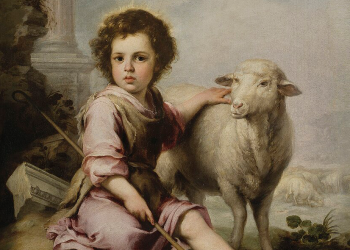
Last Sunday, we saw that the Risen Lord is like the Good Shepherd, who goes in search of the lost sheep, gathers them together, and leads them back home.
This interpretation becomes even clearer in today’s Gospel passage (Lk 24:13–35), which recounts the Risen Lord’s encounter with the two disciples on their way to Emmaus.
In the final verses (Lk 24:33–35), we see the fruit of this encounter: the two disciples, having recognized in the traveler who had become their companion on the road the crucified and risen Lord, immediately, without delay, return to Jerusalem. There, they gather with the Eleven and the other disciples who were with them; and together they recount the unique experience each has personally lived, which unites them as one Church: “The Lord has truly has risen" (Lk 24:34).
The fruit of the Lord’s Resurrection, therefore, is not limited to a personal experience that consoles or enlightens the heart of each disciple; rather, it is an event that reconstructs the body of the Church.
The Risen Lord did not only appear to his disciples; he drew them together. And the final passage of today’s reading confirms that Easter is not so much about creating enlightened individuals as it is about bringing a people back together in unity.
How does this change, how does this new beginning take place?
It happens first and foremost because the Risen One intentionally seeks out his own.
Just as he took the initiative to call them at the beginning of their journey together, so now he takes the initiative to call them again.
And to do so, he must go out in search of them.
It is not they who seek the Lord, even though, from the testimony of the women, they know that he could be alive (Lk 24:22–24). They know this, and yet they travel away from the very place where they could, and perhaps should, have sought Him. In his account, Luke implies that the disciples’ destination was precisely this: to move away from Jerusalem, from the very place where the Lord had died.
The Risen One seeks them out and finds them, because an encounter with Him is not a reward for those who have persevered, but a visitation by God to those who have gone astray.
Yet once he reaches them, the Risen One does not immediately reveal himself, just as He did in other accounts of His appearance after the Ressurection. Why?
The Risen One does not force Himself upon them; He does not present proof of His resurrection.
He does something far more important, and in a way, more “useful”: the Risen One teaches His disciples to recognize Him, adopting a series of actions that enable them to do so, not just on the road to Emmaus, but throughout the entire journey of life.
To do this, the Lord leads the disoriented disciples to two places where he was accustomed to spending time with them: the Word and the breaking of bread.
He does not lead them to a new place, but brings them back home, to the two spaces where their relationship with Him had begun and grown: the Word and the broken Bread.
Through the Word, he sheds light on the days of His Passion and brings the disciples back to where he is already present, where he will always be, and where everything speaks of him. This is why their hearts burn within them (Lk 24:32).
Moreover, by breaking the bread, the Risen One does not invent a new sign: he takes up the gesture that was already at the heart of his way of loving. And the disciples immediately recognize him, and their eyes are opened (Lk 24:31), because that broken bread is not merely a memory for them, but a living presence.
The Risen Lord, therefore, wants his followers to learn to recognize him where he has chosen to remain: in the Word and in the Eucharist.
Where and when this takes place, the community of believers is restored—not as a collection of individual experiences, but as the place of shared recognition. Each person, in their own uniqueness, knows that they can find the Lord in the same places, in the same signs.
The community born out of Easter is a community of faith.
The disciples are not united because they have things in common, because they share the same interests or ideas. They come together because they have all experienced the same way of recognizing the Lord, because they have all found him alive in the Scriptures and in the broken Bread.
+Pierbattista
*Translated from Italian