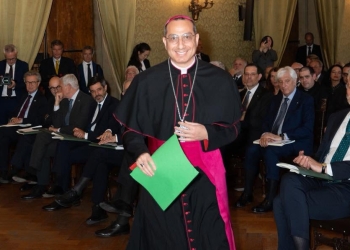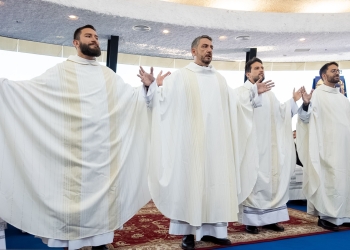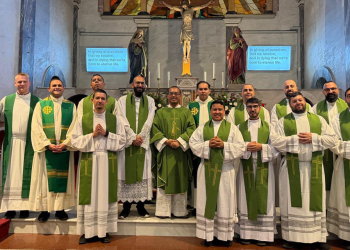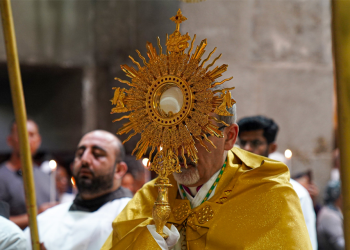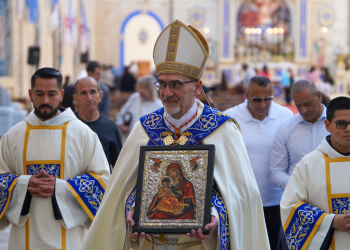
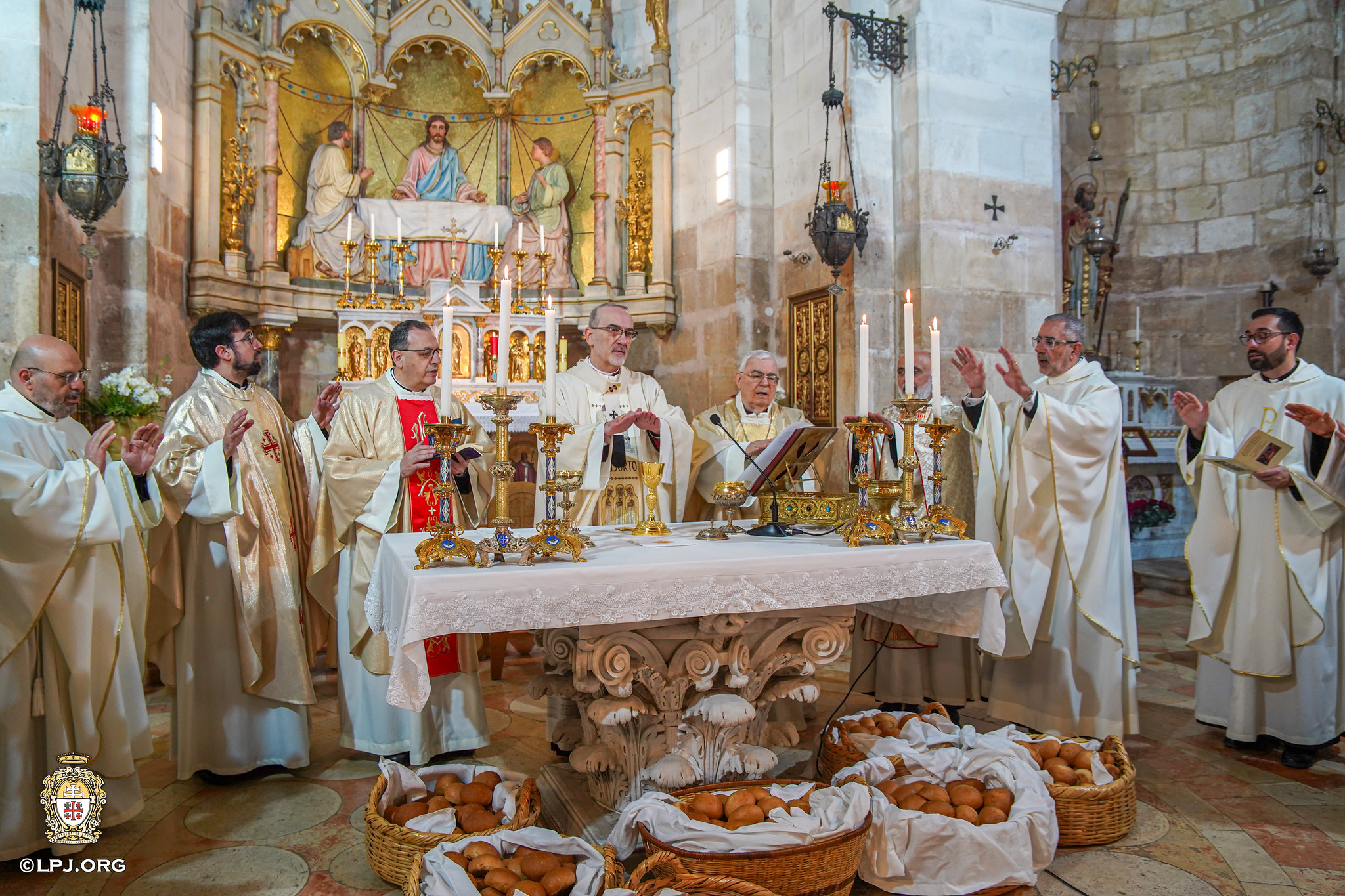
In the village of El-Qubeibeh—traditionally identified with Emmaus—His Beatitude Cardinal Pierbattista Pizzaballa, Latin Patriarch of Jerusalem, presided over the Eucharistic celebration on Monday, April 13, 2026, at the local sanctuary. Situated along the ancient road leading to Jerusalem, the liturgy commemorated the encounter of the Risen Christ with the two disciples, Simeon and Cleophas.
The Patriarch opened the celebration by greeting the parish priest, Fr. Sebastian Eclimes, O.F.M., along with the priests and faithful pilgrims from neighboring villages in the Ramallah governorate. The gathering reflected the lived reality of the local Church, which continues to wrestle with a deferred hope for peace—much like the disciples themselves. Yet, drawing from the Gospel, the Patriarch invited the faithful to interpret the events of their lives through the light of Scripture and the Eucharist, receiving new sight in the Risen Lord.
From disappointment to recognition
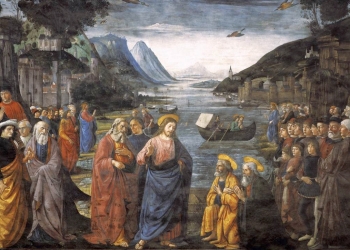
Reflecting on the Gospel reading (cf. Lk 24:13–35), the Patriarch emphasized its enduring teaching. He recalled how the two disciples, leaving Jerusalem, were burdened by disappointment, convinced that their hopes and plans in Jesus had failed. Their words—“We had hoped…”—express a deeply human experience of shattered expectations shaped by limited, earthly perspectives.
Yet it is precisely in this moment of confusion that Jesus draws near. He walks alongside them on the road that leads them away from Jerusalem, listens to their pain, and gradually reinterprets the events they had lived through. Through the Scriptures, He sheds light on their sense of failure, revealing that what seemed like defeat was, in fact, part of God’s plan. Finally, in the breaking of the bread, their eyes are opened, and they recognize Him as the Risen Lord.
A message for today
The Patriarch stressed that just as Jesus entered the lives of the two disciples in their moment of confusion, He continues to enter our lives—on personal, social, and even national levels—especially when we feel lost or disheartened.
Often, he noted, we hope for a reality different from the one we are facing, and we struggle to understand our experiences on our own. However, it is through the Word of God and the celebration of the Eucharist that we are given a new perspective. “Our faithfulness to these sacraments,” he affirmed, “enables us to adopt a different attitude toward the events of life.”
If we wish to recognize the Risen Lord among us, the Patriarch continued, we must remain rooted in Scripture and in the breaking of the bread—just as the two disciples encountered Him on the road to Emmaus.
Called to be bearers of the light
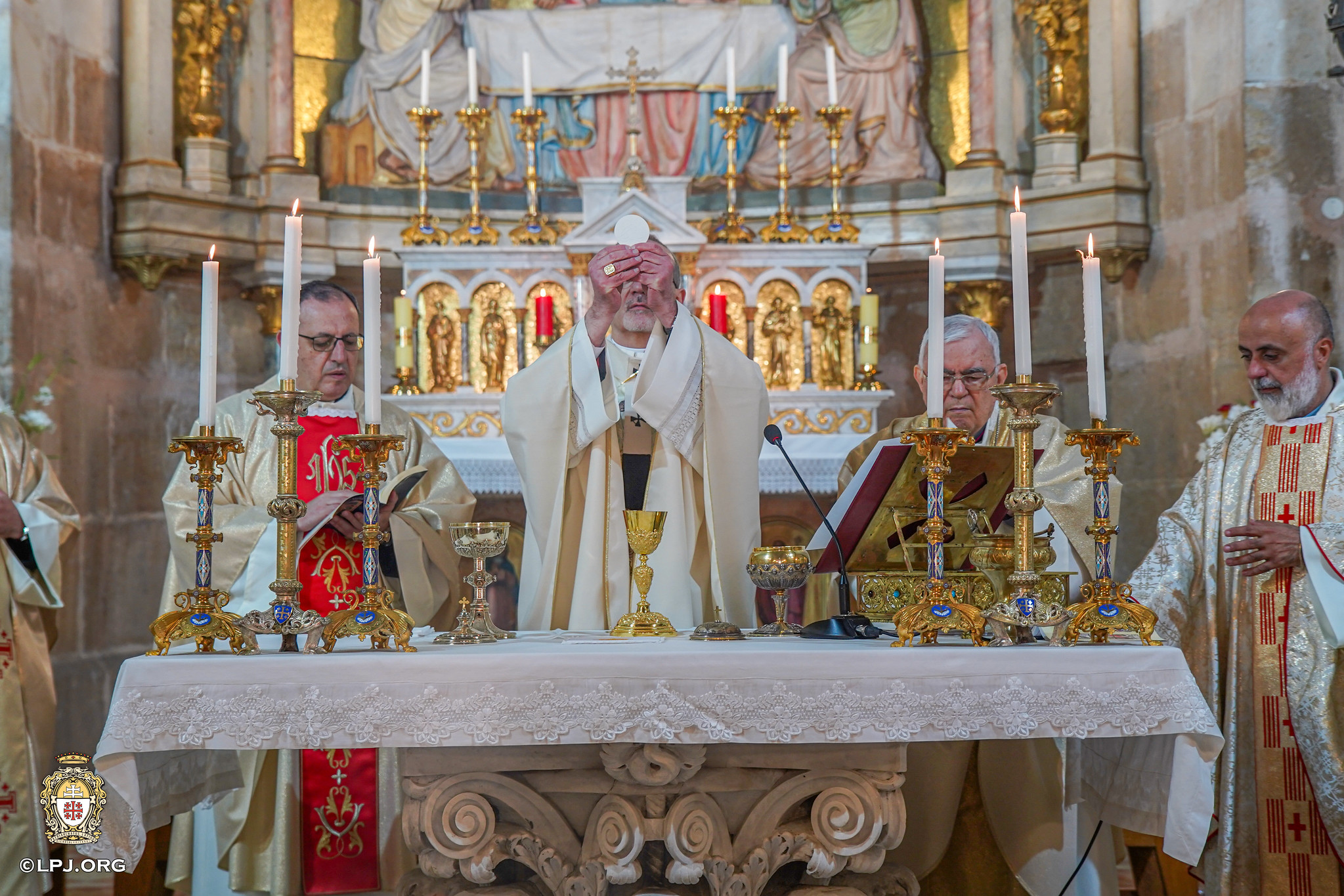
Concluding his homily, the Patriarch expressed his hope that the faithful, having received the light of Christ, would in turn reflect that light within their communities.
“In our time,” he affirmed, “there is a great need for this light.” Christians, therefore, are called not only to receive the light of the Risen Christ but to become bearers of it, especially here in this wounded land.
Distributing bread
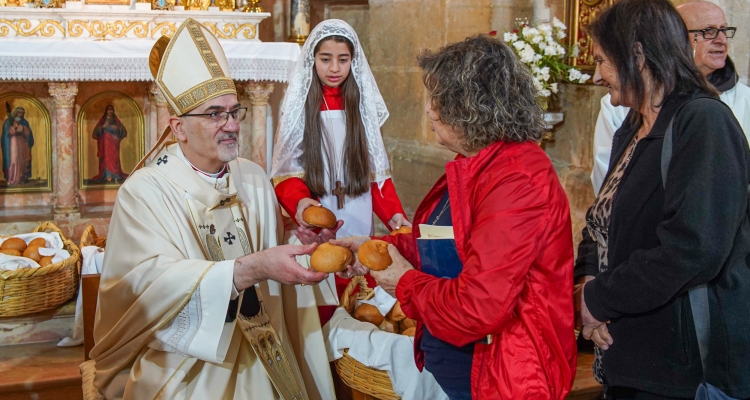
At the end of the Mass, the Patriarch distributed blessed bread to the faithful, commemorating the culminating moment of the two disciples’ journey, when Jesus broke the bread and they recognized the Risen Lord.
The celebration in the village of El-Qubeibeh—located about 11 kilometers northwest of Jerusalem, near the separation wall, and traditionally identified with the house of Cleophas, where the remains of a Crusader basilica still stand—brought together memory and present-day faith, offering a quiet reminder of the Risen Lord’s abiding presence among His people.