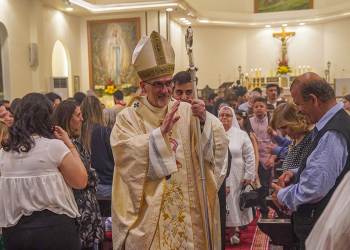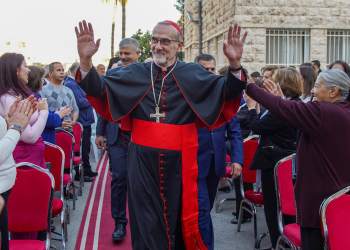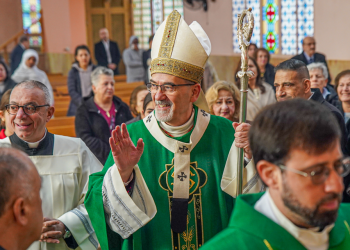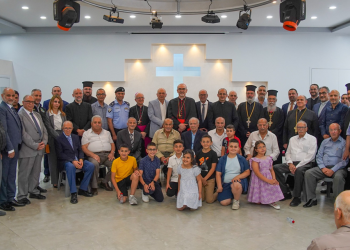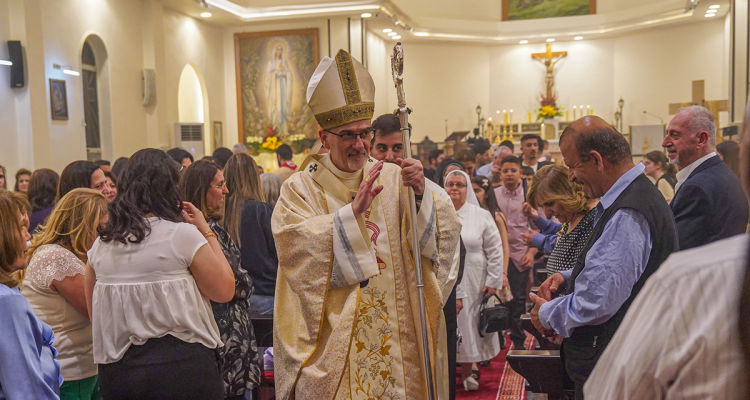
His Beatitude Cardinal Pierbattista Pizzaballa, Latin Patriarch of Jerusalem, concluded his pastoral visit to the Parish of St. George the Martyr in Irbid, held from May 14 to May 17, 2026. The following is a summary of the pastoral visit to Irbid:
The visit opened with a festive reception in the city of Irbid, where His Beatitude was welcomed by parishioners, civic leaders, and local dignitaries, including Fr. Firas Arida, parish priest of Irbid, Senator Jamil Nimri, and representatives of public and social life.
As a sign of deep esteem and cultural hospitality, the Cardinal was presented with a traditional Jordanian cloak, symbolizing the shared bonds of affection and the pride of the local community in his presence among them.
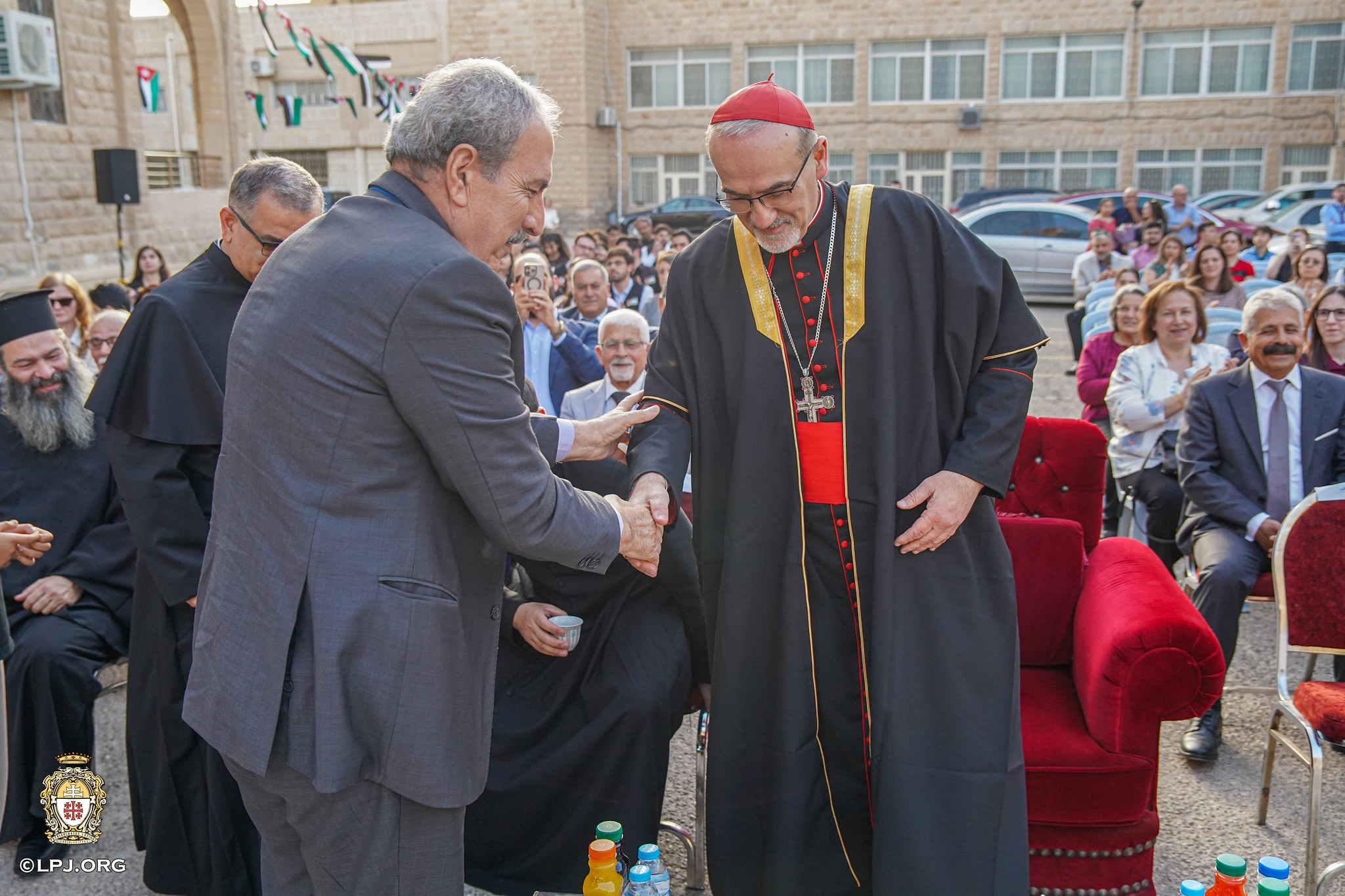
His Beatitude then presided over the Mass of the Ascension of the Lord at the parish church, where he emphasized in his homily that “the primary role of the shepherd is to listen,” adding: “And in order to listen, we must make time for it. I am here to get to know you better and to be part of the life of the Christian community in Irbid.” He also referred to the Diocese of Jerusalem as an open city that welcomes everyone and serves as “a light to the nations,” recalling the warm welcome he had felt since his arrival in Jordan.
Fr. Firas Arida welcomed His Beatitude, expressing the parish’s joy at the pastoral visit. For his part, the Governor of Irbid highlighted Jordan’s spirit of harmony and coexistence among its diverse communities, while Munther Bataineh delivered a speech on behalf of the tribal leaders, welcoming the Cardinal’s visit and expressing the city’s pride in this pastoral presence.
The day concluded with a meeting between the Cardinal and the Christian youth of northern Jordan, who celebrated the 50th anniversary of the Irbid Youth Group, in an atmosphere of joy and thanksgiving for decades of service and youth ministry in the Church.
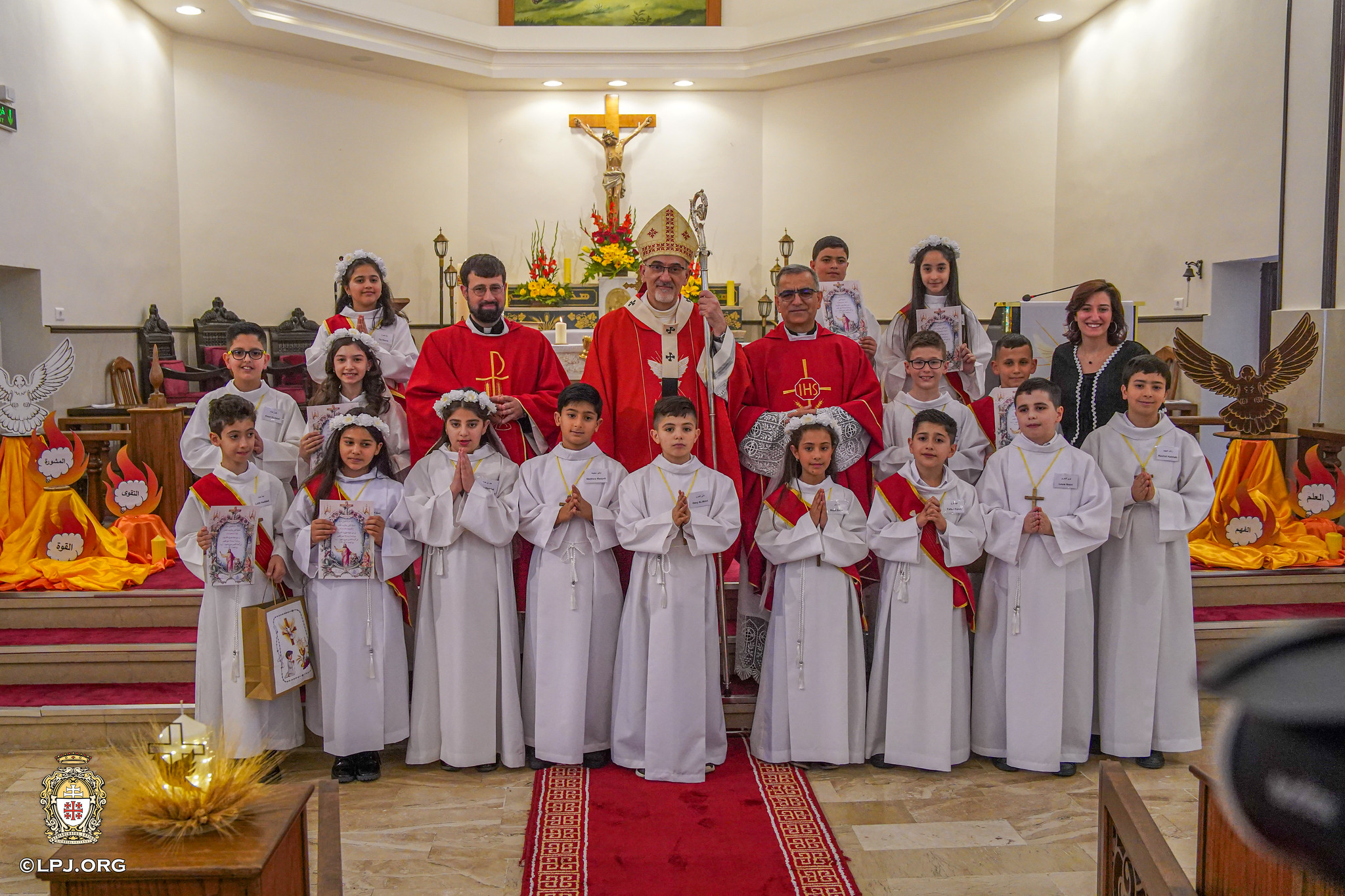
On the second day, His Beatitude presided over the First Holy Communion and Confirmation Mass at St. George the Martyr Church in Irbid, where he administered the sacraments to 16 boys and girls from the parish, in an atmosphere of faith and family joy. He also conferred the Sacrament of Baptism to two children.
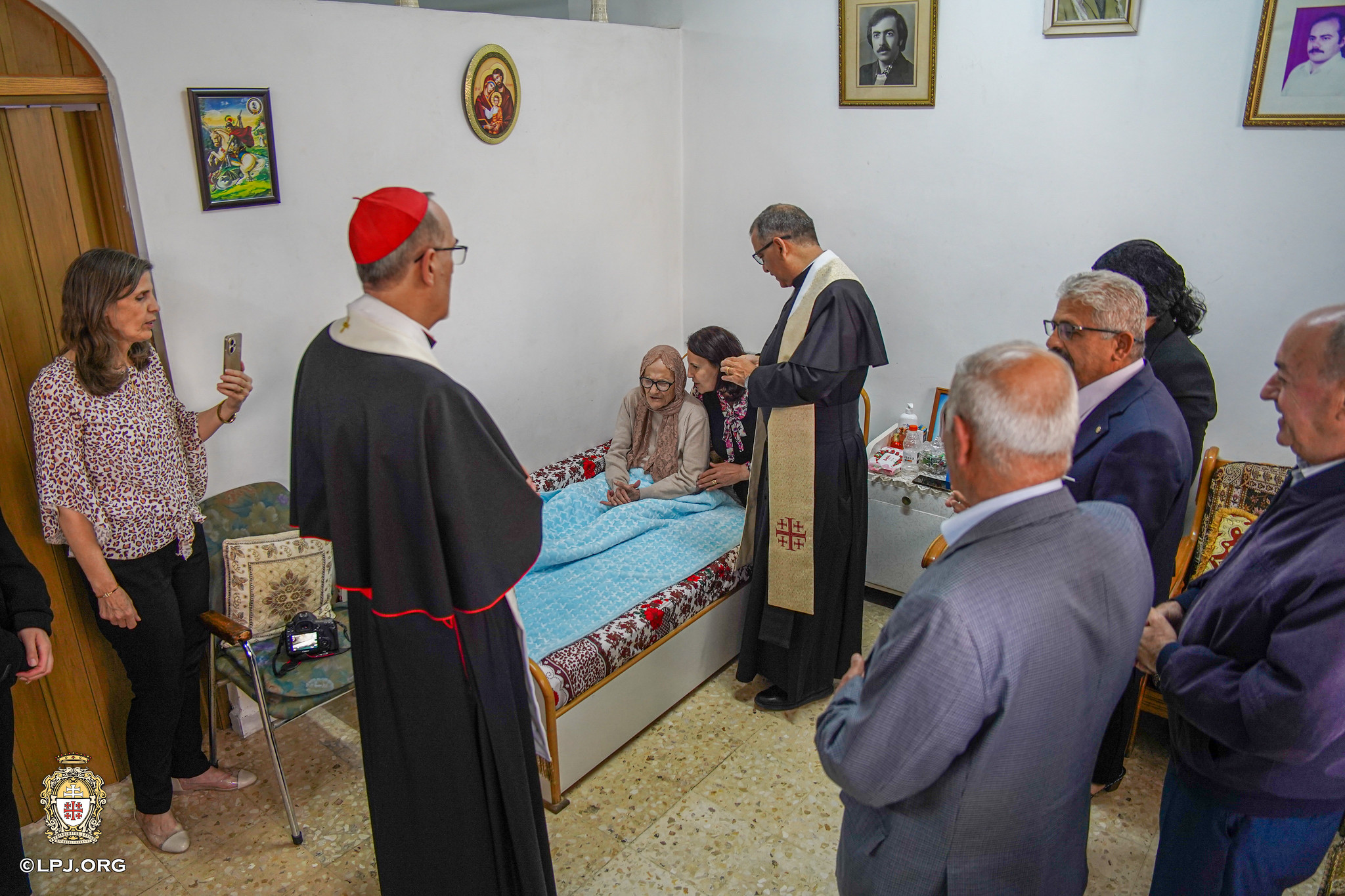
After the Mass, he administered the Anointing of the Sick to several parishioners, and later met with various parish groups, including youth, the charity committee, altar servers, and the choir, commending their service and their role in the life of the Church and society.
As part of his visit to Irbid, and accompanied by Bishop Iyad Twal, Patriarchal Vicar in Jordan, he visited the diwan of the Bani Dhiab tribe, where he was received by several official and social figures.
A tribal spokesperson welcomed His Beatitude, saying: “Your presence among us today is a message of hope and a courageous stance, a living embodiment of human values rooted in love and fraternity, affirming that light is stronger than injustice and that love must prevail.” Mr. Nidal Bani Dhiab, former Minister of Labor, also welcomed him, praising his efforts in preserving the sacred identity of the Holy City of Jerusalem.
The meeting was attended by several former prime ministers and national figures, including Dr. Abdel Raouf Rawabdeh, Dr. Awn Khasawneh, and Samir Rifai, as well as former ministers and community leaders.
For his part, His Beatitude expressed his gratitude for the warm reception, emphasizing the important national and social role of Jordanian tribes, saying: “As a tribe, you will continue your role in building the nation and society here in Jordan, and as Christians, we have been, remain, and will continue to be an essential part of building Jordan, as in every place where we are present. Jordan is a unique model in the Middle East for its spirit of coexistence and safety. May God protect and preserve it.”
The third day included spiritual, national, and ecumenical encounters, reflecting a spirit of unity and generosity among the various components of local society and the churches of the city.
His Beatitude began his day with a visit to the Rosary School, where he was welcomed by the administrative and teaching staff and the school principal, Sr. Laurette Zwaideh, and was briefed on the school’s educational mission and its important role in forming future generations.
This was followed by a visit to the Church of St. Mary of the Annunciation of the Evangelical Episcopal Church, where he was received by Fr. Samir Esaid. The visit included a tour of the Arab Episcopal Secondary School, known for integrating blind and sighted students within the same educational environment, as a model of educational and human inclusion.
He also visited the Rosary Sisters Hospital, where he was introduced to the healthcare and humanitarian services the hospital provides to the local community in the city of Irbid.
As part of his ecclesial visits, he also visited the Church of Our Lady of the Annunciation of the Greek Catholic Church, where he was received by Fr. Ghaleb Bawab, and the Greek Orthodox Church, where he was received by Fr. Dionysius Haddad. During these visits, His Beatitude emphasized the importance of strengthening relations among the Churches, saying: “We visit one another not as a mere courtesy, but to strengthen our relationships, because we are all one in Christ.”
The visit also included Caritas Irbid, where he was briefed on the humanitarian and health services provided by the center, particularly to Syrian and Iraqi refugees. He toured its various departments and listened to a detailed explanation of its programs and services for all segments of Jordanian society. At the end of the visit, the center’s staff presented him with a traditional Jordanian keffiyeh in appreciation of his visit and service.
He also visited the Mayor of Irbid, Mr. Imad Al-Azzam, who expressed his gratitude for the visit, emphasizing the importance of coexistence and mutual love among all citizens. He likewise visited the heritage diwan of the Krezem family, in a stop reflecting the social and cultural fabric of the city.
The day concluded with the Sacrament of the Anointing of the Sick for several parishioners, followed by the celebration of Holy Mass at the parish church. In his homily, His Beatitude expressed his joy at being in Irbid, thanking the parish priest and all parish groups for the excellent organization of the visit, adding: “This pastoral visit brings the parish together, and as a shepherd it gives me the opportunity to better understand the community up close.”
On the fourth and final day of the pastoral visit to the Latin Parish of Irbid, His Beatitude presided over Sunday Mass, together with Bishop Iyad Twal and Fr. Firas Arida, in the presence of parishioners and faithful.
After the Mass, he visited Yarmouk University, where he was received by Prof. Malik Ahmad Shraireh, the university president, along with the official for Islamic endowments in Irbid and several academic and official figures.
The visit included a dialogue meeting that highlighted the values of coexistence and dialogue, held under the title “Meeting of Love and Moderation.” During the meeting, His Beatitude presented his recent pastoral letter, “They Returned to Jerusalem with Great Joy,” and spoke about the historical role of the Hashemite Custodianship over the Christian and Muslim holy sites in Jerusalem, as well as the importance of fostering a culture of peace and openness among younger generations.
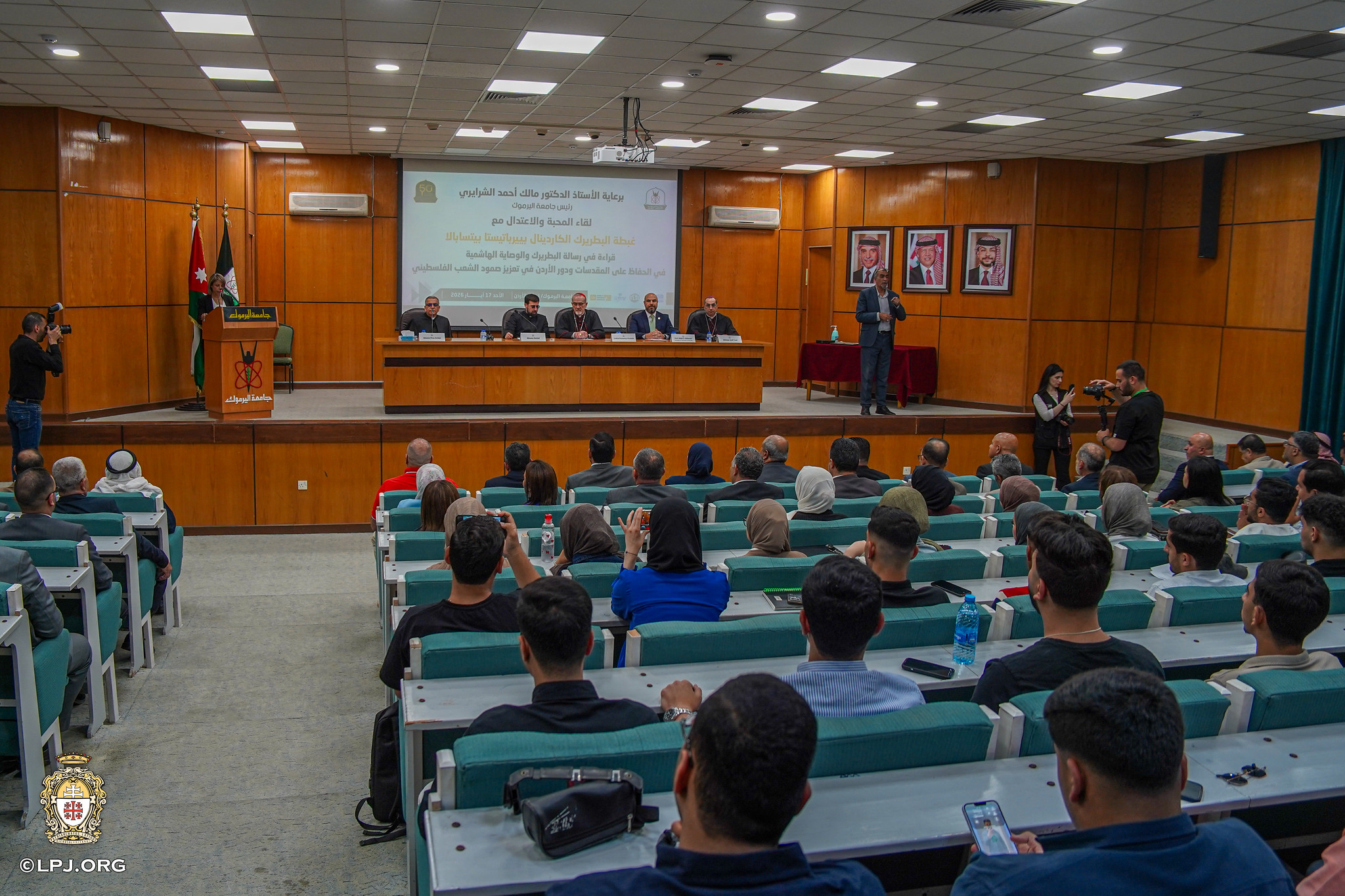
The university president expressed his pride in the visit, saying: “Your presence among us today is a source of pride and honor. We are proud of your positions and your defense of fundamental human values in Jerusalem and wherever the Latin Patriarchate is present.”
The visit also included the Governorate of Irbid, where His Beatitude was received by the deputy governor on behalf of the governor. The meeting emphasized cooperation among all components of society in serving citizens and promoting the common good. His Beatitude expressed his appreciation for the efforts made to serve the people of the city, stressing the need to strengthen fraternity, solidarity, and openness among all.
The pastoral visit concluded in an atmosphere of love and joy, after several days filled with spiritual, pastoral, national, and ecumenical encounters, reflecting the depth of communion between the Church and its faithful, and the Church’s role in contributing to the building of a society founded on love, solidarity, and coexistence, affirming the importance of a pastoral presence close to the people, walking with them in all circumstances of life.