December 21, 2025
Fourth Sunday of Advent A
Matthew 1:18–24
The evangelist Matthew places the passage we read on this fourth and final Sunday of Advent (Matthew 1:18–24) immediately after the account of Jesus’ genealogy.
These two sections are closely connected because they both begin with the same word, genesis (sometimes translated differently in the different languages): first,“the book of the genealogy of Jesus Christ, the son of David, the son of Abraham” (Mt 1:1); then, “this is how the birth of Jesus Christ came about” (Mt 1:18).
The story Matthew is about to tell is part of a history that spans thousands of years - a tapestry of names, events, and human frailty. Above all, it is the story of God’s covenant and His faithfulness to the promise made to Abraham, a promise renewed again and again throughout the centuries, despite everything.
There are other links between these two opening sections of Matthew’s Gospel. Let us focus on the four women Matthew includes in his genealogy, because they have a special connection with Joseph.
Tamar (Gen 38), deceived by Judah, disguises herself as a prostitute to obtain offspring. Her act is bold and scandalous, yet it reveals a justice that goes beyond the law: she defends the right to life and to the promise. Rahab (Joshua 2), a prostitute from Jericho, welcomes the Israelite spies at the risk of her own life. She becomes the first pagan believer, and this gives her a place in the Messiah’s lineage. Ruth, too, is a foreigner. Her radical fidelity goes beyond any obligation; it is the gratuitous love that binds her to Naomi even when she has nothing to gain. Finally, there is Bathsheba (2 Sam 11), not even named in the text - she is “the wife of Uriah,” whom David kills to conceal his sin. Yet God does not erase this wounded history. He transforms it: from Bathsheba comes Solomon, the king of peace (1 Chr 22:9).
These women take risks, welcome, love, and transform. They show that salvation does not come through regularity or perfection, but through faith and the willingness to be drawn into God’s story. They are not righteous, but they are justified.
At first glance, these women seem to have nothing in common with Joseph. They are women; he is a man. They are often sinners, marginalized, irregular; Joseph is described as righteous (“Joseph her husband, since he was a righteous man…” – Mt 1:19). Yet Joseph’s story reveals the same justice that transcends boundaries - a justice fulfilled not where the Law is perfectly observed, but where one accepts and embraces God’s plan.
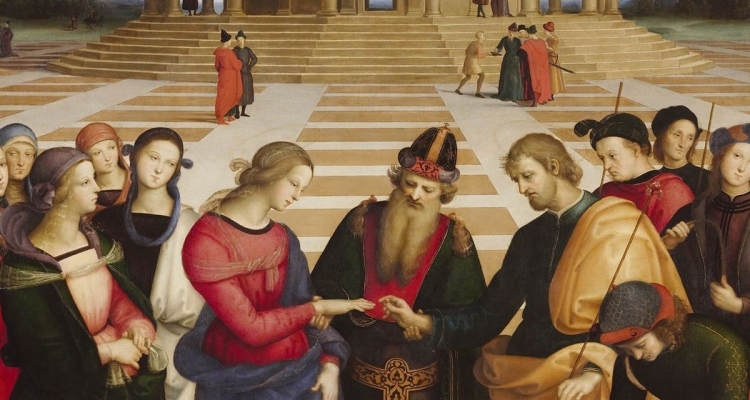
These women prepare the way for Joseph. He too faces something unprecedented: an incomprehensible act of God, something that does not yet have a name. Joseph is called to give this new reality a name - to recognize it as coming from God and to take it into his life (“Joseph, son of David, do not be afraid to take Mary as your wife” – Mt 1:20).
Naming someone is a deeply symbolic act: it creates relationship and transforms the one who speaks the name. In Genesis, Adam truly becomes himself only when he names the woman, Eve.
Joseph becomes a father at the very moment he names Jesus, entering into a relationship of guardianship and responsibility with the Son given to him. His life is completely overturned - but this is the sign that God is at work, continuing His story with humanity.
Likewise, every believer who pronounces the Name of the Lord affirms faith in the One who saves (“He will save his people from their sins” – Mt 1:21), who is God-with-us, Emmanuel (Mt 1:23).
And by pronouncing that Name, we allow ourselves to be transformed by its meaning, allowing to be drawn into the great history of salvation.
+ Pierbattista