February 17, 2019
Sixth Sunday in Ordinary Time, Year C
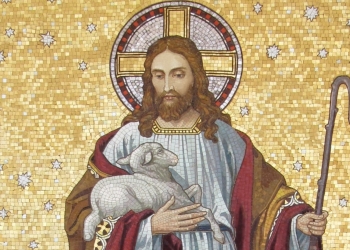
A key to reading the passage of today’s Gospel (Lk 6:17, 20-26) is given us in verse 20, where we read that Jesus, “raising His eyes towards His disciples, said…”
At the root of these well-known words, which we refer to as Beatitudes, is Jesus’ view about those who follow Him: He looks at them, and then relates how He sees them.
The Beatitudes are basically a viewpoint, a way of seeing others, life, history, situations. Jesus sees life in His way, which is that of the Father. Jesus comes along, speaks His view and tries to communicate it to His disciples. He tells them there is another way of looking at reality.
Our view is to look and stop at what we see: if our view sees a poor person, it sees only a poor one; if it sees someone who cries, it just sees someone who cries; if it sees riches, it only sees riches. It sees reality from a inward-looking stance.
Jesus’ view, instead, is capable of seeing within, seeing beyond, seeing things in relation to the Father and to the way the Father has of continuing His story with man.
He sees the poor as those to whom the Kingdom belongs; sees the hungry as those who will experience the Father’s care; sees the afflicted as those who will know the Father’s comfort; sees losers as those who open themselves to true riches, to the greatest reward.
And He sees the rich, the pleasure-seeking, the satiated, as people who cannot open themselves to anything more than what they already have, as persons locked in the present, persons for whom life is everything that they live here and now.
Jesus does not explain why it happens so: it’s not something that one cannot explain by human logic, but it’s a view of faith to be welcomed. Later, in chapter 10, Jesus himself will tell of His amazement at this mystery, at the Father’s viewpoint: “In that same hour Jesus rejoiced in the Holy Spirit and said: “I thank you, Father, Lord of heaven and earth, that you have hidden these things from the wise and understanding and revealed them to little children. Yes, Father, for such was your gracious will” (Lk 10:21).
The beatitudes, then, are the meaning of revealed history to the little ones.
What happens when there is this view?
It leads to a total reversal of perspective, of interpreting reality.
Reality remains the same, therefore the poor are poor and so on; but the view can see that this reality is a privilege, a gift, a blessing; this reality is the way that leads to God, that connects with Him.
Whoever experiences salvation, the coming of God into his/her life, sees therefore reality in a different way, in a reversed way.
One can’t but think of the Virgin Mary: after having been through her personal encounter with God in the Annunciation, after experiencing that the Lord really brought life where life could not have been, then Mary, with her Magnificat, sings of a new world; she sings of a world just as she sees it now, in relation to Christ and to His salvation given to the least.
And we can say the same of the apostle Paul: after encountering the Lord Jesus on the way to Damascus, it completely changes his way of looking at life and the world. And he himself says that what seemed essential to him is no longer so, it’s as rubbish. While what seemed to him despised and unworthy, becomes the place of salvation, of blessing.
It’s not about straining oneself to be happy; rather it’s about letting oneself be transformed by the look, because it is an Easter view.
If this view is missing, Christianity does not bring anything new to the world, and is unable to change anything: history remains closed in itself.
But if there is this new view, there is also another way of thinking, living, acting, a way capable of changing history because it is increasingly clear to the vision that leads to one’s heart.
+ Pierbattista